One of the most talked-about topics in the bully community is:
bloodlines.
When researching Micro Bullies, owners often hear names connected to:
- pedigrees,
- structure,
- breeding programs,
- and overall production quality.
But what do Micro Bully bloodlines actually mean?
Bloodlines help describe:
- ancestry,
- genetic influence,
- physical traits,
- temperament tendencies,
- and breeding history.
Understanding bloodlines helps owners better evaluate:
- structure,
- consistency,
- breeder goals,
- and long-term breeding direction.
This guide explains:
- what Micro Bully bloodlines are,
- how pedigrees work,
- how genetics influence structure and temperament,
- and why responsible breeding matters more than hype alone.
What Are Micro Bully Bloodlines?
Bloodlines refer to:
a dog’s ancestry and genetic background.
In the bully community, bloodlines are often discussed in relation to:
- structure,
- size,
- temperament,
- consistency,
- and overall breeding goals.
Pedigrees may include dogs known for:
- compact builds,
- muscle density,
- broad chests,
- movement,
- or specific visual traits.
Bloodlines help breeders better understand:
- genetic patterns,
- consistency,
- and long-term breeding outcomes.
Why Bloodlines Matter
Bloodlines can influence:
- structure,
- movement,
- body proportions,
- temperament,
- and overall appearance.
Responsible breeders study pedigrees to better understand:
- strengths,
- weaknesses,
- consistency,
- and breeding compatibility.
Well-planned breeding programs often focus on:
- balanced structure,
- stable temperament,
- mobility,
- and healthy long-term development.
Bloodlines should never be viewed as:
hype alone.
Genetics matter most when paired with:
- responsible breeding,
- structure awareness,
- and health-focused decisions.
Understanding Pedigrees
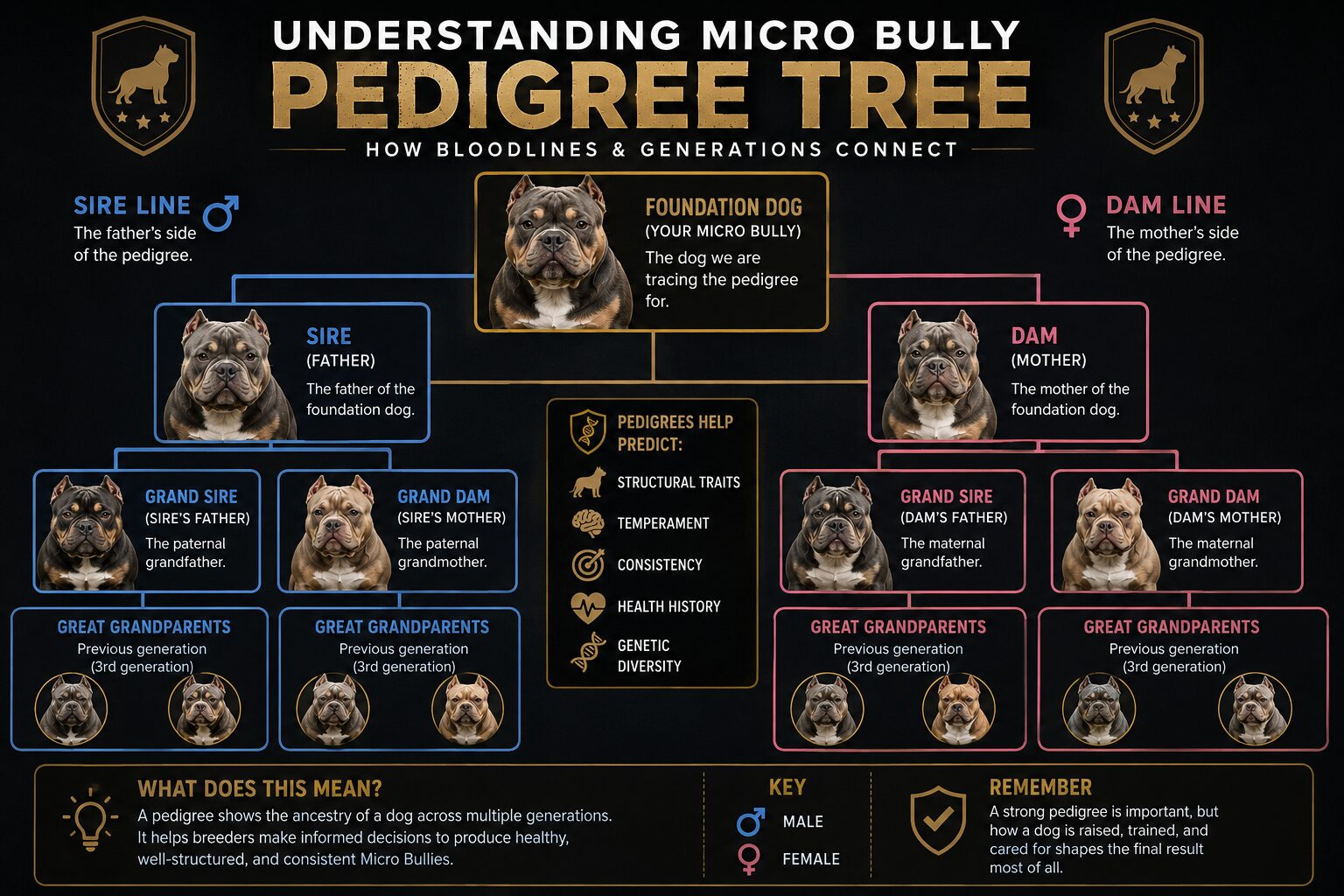
A pedigree is:
a family tree for a dog.
Pedigrees show:
- parents,
- grandparents,
- and previous generations.
Breeders use pedigrees to study:
- genetic consistency,
- physical traits,
- temperament tendencies,
- and overall lineage history.
Pedigrees may also help breeders evaluate:
- structure trends,
- movement quality,
- and breeding compatibility.
Understanding pedigrees allows owners to better evaluate:
- breeder goals,
- program consistency,
- and long-term breeding direction.
How Genetics Influence Structure
Genetics play a major role in:
- height,
- compactness,
- muscle density,
- movement,
- chest width,
- and overall proportions.
Some bloodlines may consistently produce:
- compact structure,
- shorter stature,
- heavier bone,
- or wider frames.
However:
structure quality matters more than exaggeration.
Responsible breeding should prioritize:
- mobility,
- balance,
- comfort,
- and healthy movement.
➡ Related Reading:
Micro Bully Structure & Build
Temperament & Bloodline Influence
Temperament is influenced by:
- genetics,
- socialization,
- training,
- and environment.
Certain bloodlines may consistently produce dogs known for:
- confidence,
- loyalty,
- social behavior,
- and companion-oriented personalities.
However, responsible ownership and early socialization remain extremely important.
Even strong pedigrees still require:
- proper training,
- structure,
- and positive development.

➡ Related Reading:
Micro Bully Temperament Explained
Consistency in Breeding Programs
One reason breeders value bloodlines is:
consistency.
Consistent breeding programs often aim to produce dogs with:
- predictable structure,
- stable temperament,
- balanced proportions,
- and recognizable breeding traits.
Responsible breeders carefully evaluate:
- compatibility,
- structure,
- movement,
- and temperament before pairing dogs.
Consistency takes:
- planning,
- experience,
- structure knowledge,
- and long-term breeding focus.
Popular Bloodline Discussions
The bully community frequently discusses:
- well-known pedigree names,
- influential sires,
- foundation dogs,
- and established breeding programs.
These discussions often focus on:
- structure,
- production consistency,
- movement,
- compactness,
- and overall influence on the breed type.
However, owners should avoid choosing dogs based only on:
- hype,
- social media popularity,
- or exaggerated appearance.
Balanced structure and responsible breeding matter far more long-term.
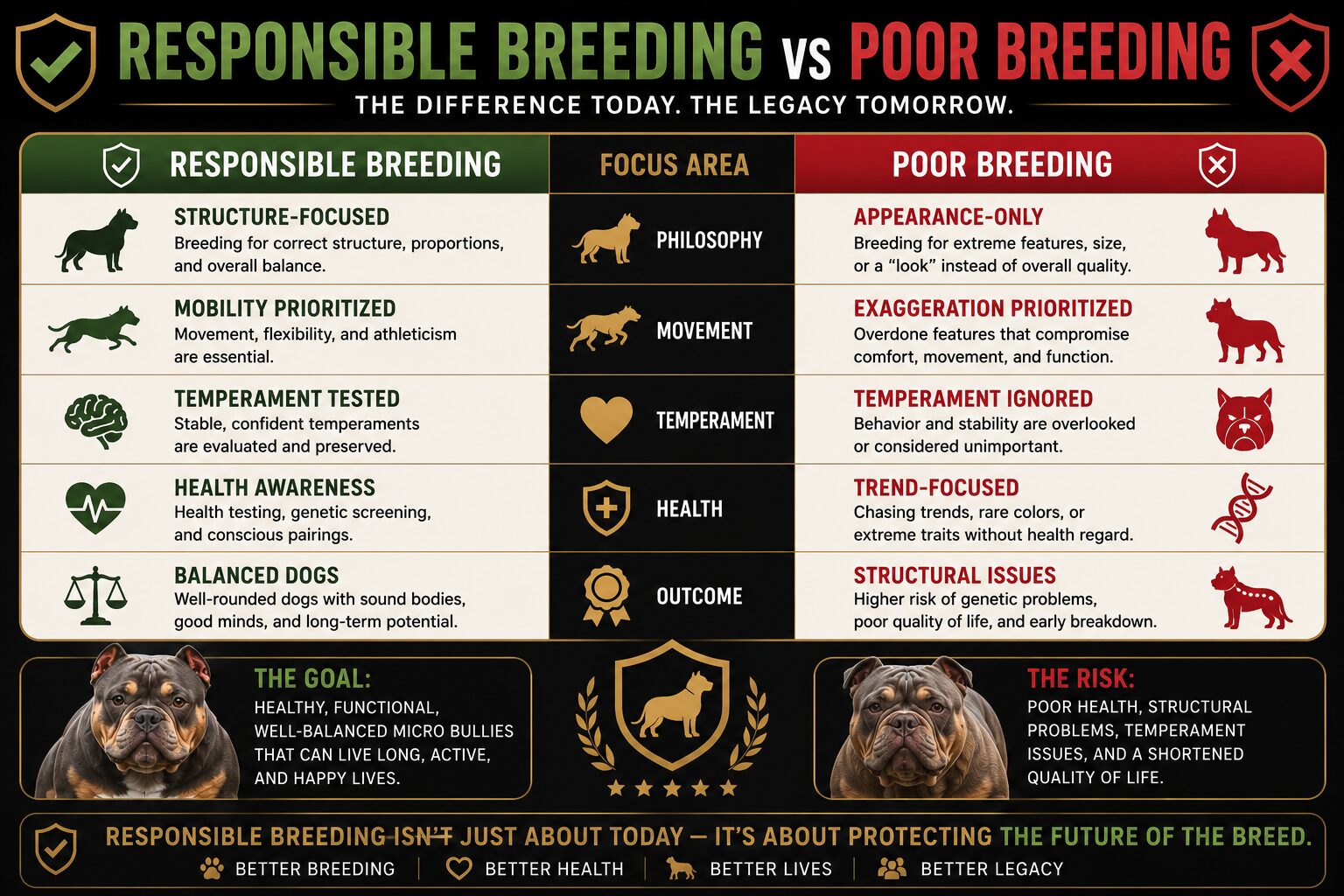
Responsible Breeding Matters Most
Even strong pedigrees should still prioritize:
- mobility,
- healthy structure,
- breathing quality,
- temperament,
- and overall wellness.
Responsible breeders should avoid prioritizing:
- exaggeration,
- unhealthy extremes,
- or appearance alone.
Potential owners should research:
- breeder reputation,
- socialization practices,
- breeding goals,
- and structure quality carefully.
➡ Related Reading:
Responsible Micro Bully Breeding Practices

➡ Looking for responsibly bred Micro Bullies?
Visit Capcity Bullys
Questions Buyers Should Ask
Potential owners researching bloodlines should ask breeders about:
- pedigree history,
- structure goals,
- temperament,
- health awareness,
- and breeding priorities.
Helpful questions may include:
- How is structure evaluated?
- What temperament traits are prioritized?
- How are puppies socialized?
- What health considerations are monitored?
- What goals does the breeding program focus on?
Education helps owners make:
- healthier,
- more informed,
- and more realistic decisions.
➡ Related Reading:
Questions to Ask Before Buying a Micro Bully
Best Products for Growing Micro Bullies
Helpful products for growing bully puppies may include:
- orthopedic beds,
- durable harnesses,
- slow feeder bowls,
- and enrichment toys.
Recommended Product:
Orthopedic Dog Bed
Supportive beds may help improve comfort and recovery.
👉 View Orthopedic Dog Beds Review
Recommended Product:
Tactical Dog Harness
A durable harness designed for compact muscular breeds.
👉 See Tactical Dog Harnesses Review
➡ Explore More Products:
All Breeds Dog Store
Final Thoughts
Micro Bully bloodlines help breeders and owners better understand:
- ancestry,
- structure,
- temperament,
- consistency,
- and breeding direction.
However, pedigrees alone do not define quality.
Responsible breeding should always prioritize:
- mobility,
- balanced structure,
- temperament,
- and long-term wellness over hype or exaggeration.
Owners who understand bloodlines are often better prepared to:
- evaluate breeders,
- understand pedigrees,
- and make more informed ownership decisions.
As the popularity of Micro Bullies continues growing, education surrounding bloodlines and responsible breeding remains increasingly important for the future of the breed type.