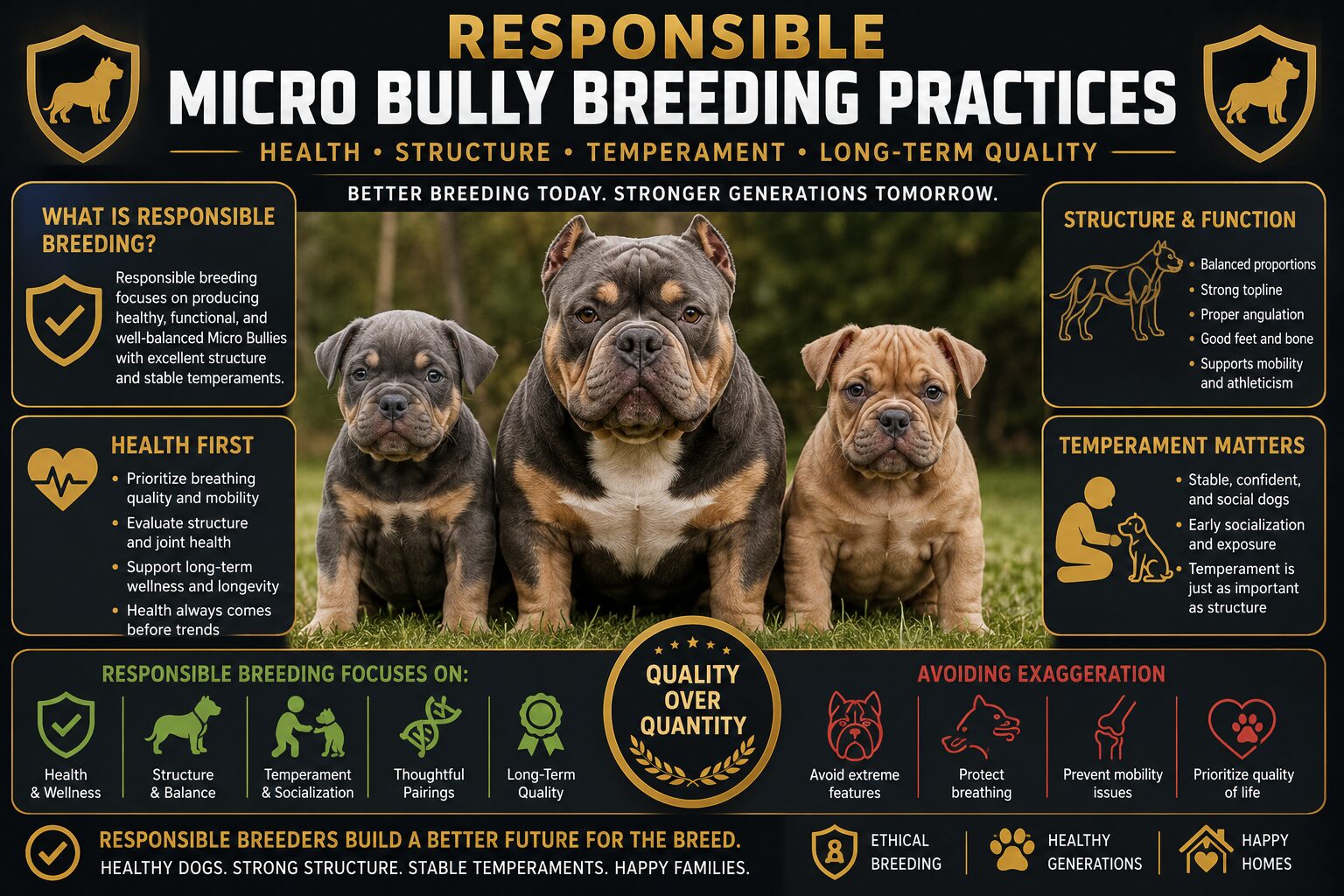
As the popularity of Micro Bullies continues growing, so does the importance of:
responsible breeding practices.
The Micro Bully community often focuses heavily on:
- appearance,
- compact size,
- muscle,
- and visual traits.
However, truly responsible breeding involves much more than producing dogs with a certain look.
Ethical breeding should prioritize:
- health,
- mobility,
- temperament,
- structure,
- and long-term wellness.
This guide explains:
- what responsible Micro Bully breeding actually means,
- why structure and temperament matter,
- how ethical breeders approach pairings,
- and what potential owners should look for when researching breeders.
What Is Responsible Breeding?
Responsible breeding means prioritizing:
- long-term wellness,
- structure,
- temperament,
- movement,
- and overall quality of life.
Ethical breeders focus on producing dogs that are:
- functional,
- balanced,
- confident,
- and capable of healthy movement.
Responsible breeding should never focus only on:
- trends,
- exaggerated features,
- or social media popularity.
Healthy dogs require:
- thoughtful planning,
- structure evaluation,
- temperament awareness,
- and responsible long-term breeding goals.
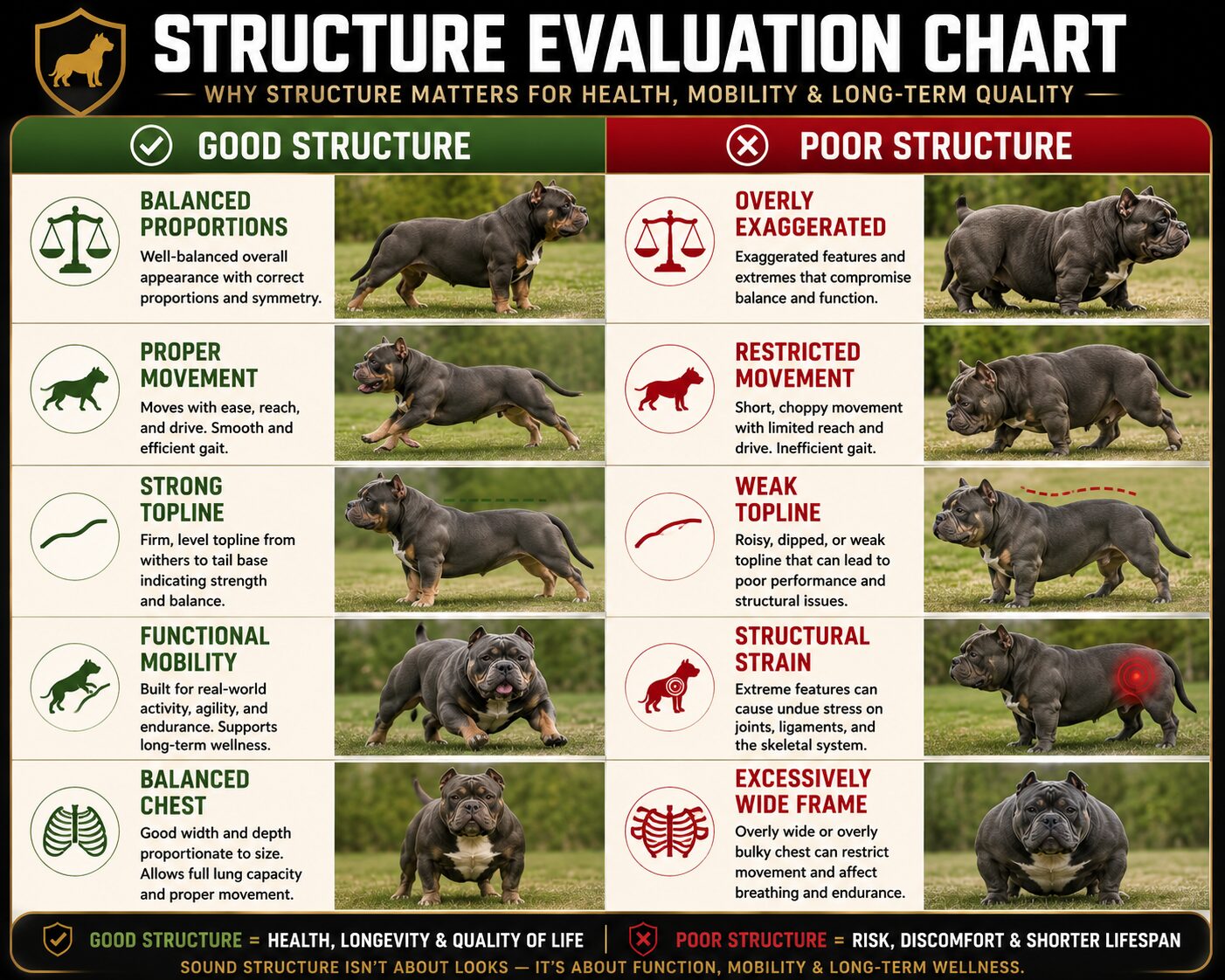
Why Structure Matters
Structure plays a major role in:
- mobility,
- comfort,
- athleticism,
- and long-term wellness.
Balanced structure helps support:
- healthy movement,
- joint function,
- posture,
- and overall physical stability.
Responsible breeders should evaluate:
- movement,
- proportions,
- feet,
- toplines,
- chest structure,
- and overall balance.
Exaggerated structure may sometimes contribute to:
- mobility concerns,
- reduced athleticism,
- and long-term discomfort.
➡ Related Reading:
Micro Bully Structure & Build
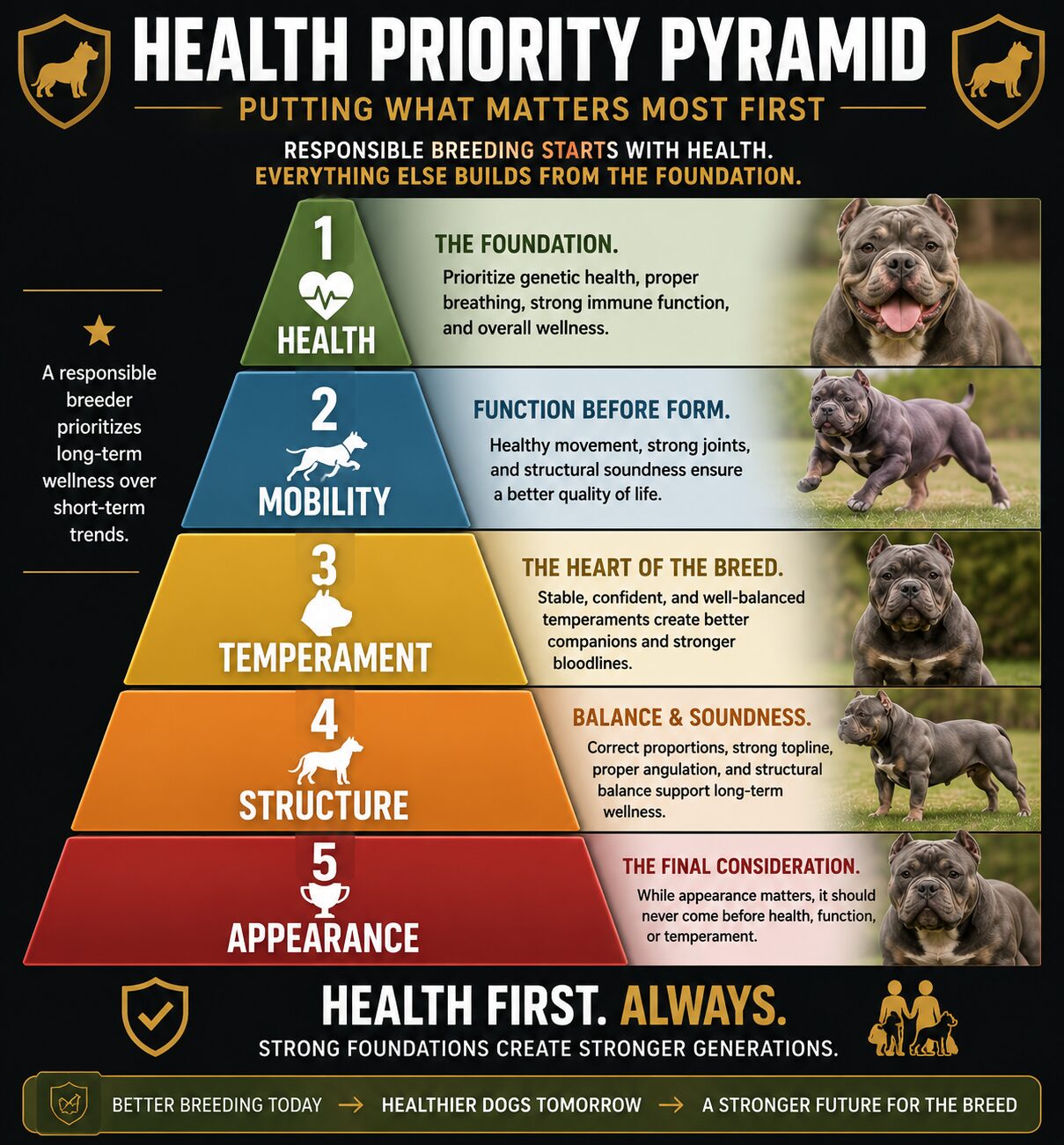
Health Should Always Come First
Health should always be prioritized above:
- hype,
- trends,
- or appearance.
Responsible breeders should remain aware of:
- breathing quality,
- mobility,
- structure,
- skin health,
- and overall wellness.
Long-term health matters far more than:
- exaggerated size,
- extreme compactness,
- or temporary popularity.
Ethical breeding practices focus on:
- healthier generations,
- improved consistency,
- and sustainable breeding direction.
➡ Related Reading:
Micro Bully Health & Wellness
Temperament & Socialization
Temperament is one of the most important parts of responsible breeding.
Breeders should ideally prioritize dogs that display:
- confidence,
- stability,
- social behavior,
- and companion-oriented temperaments.
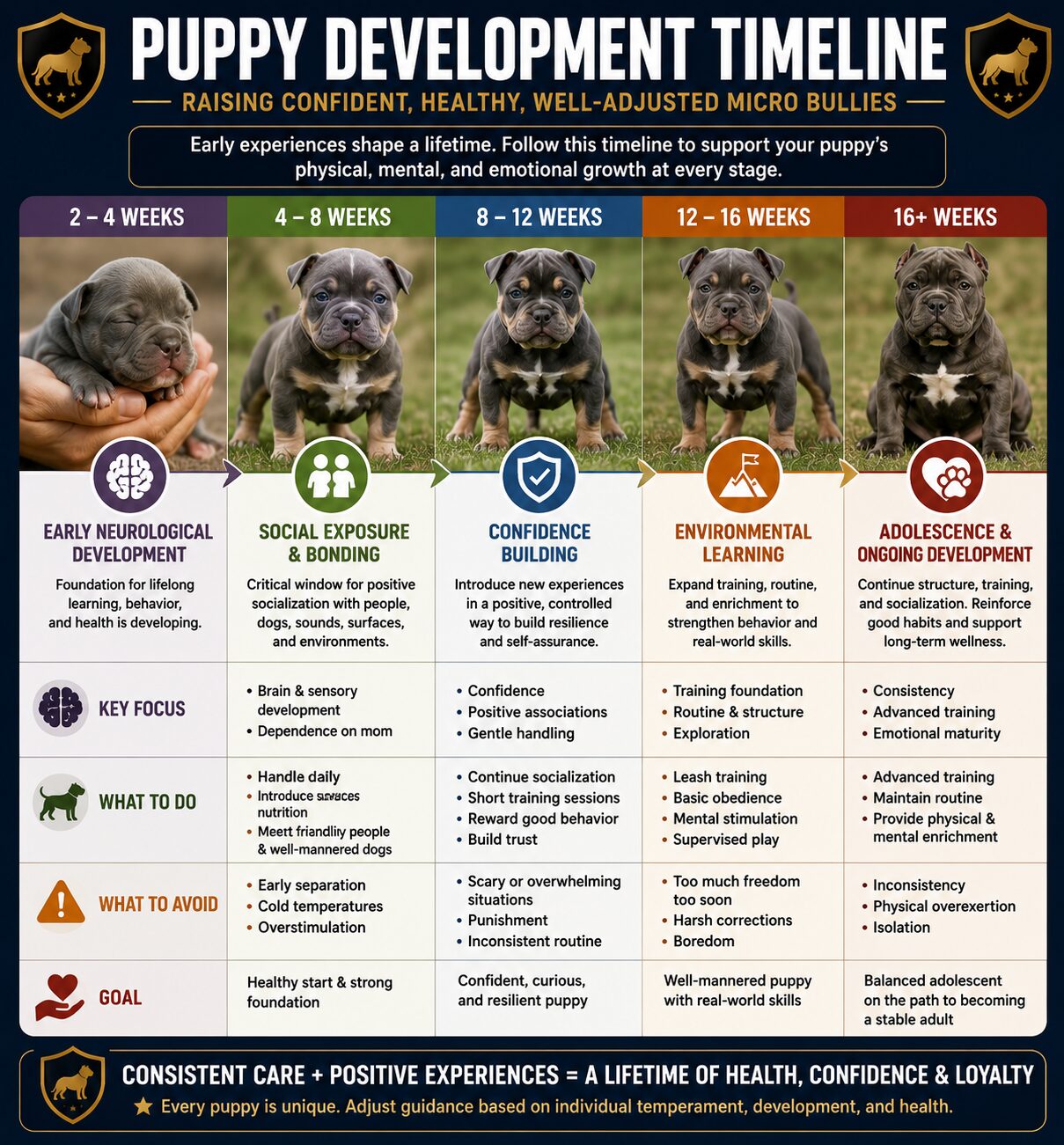
Responsible programs also focus on:
- puppy socialization,
- early handling,
- environmental exposure,
- and confidence development.
Even strong bloodlines still require:
- proper socialization,
- training,
- and responsible ownership.
➡ Related Reading:
Micro Bully Temperament Explained
Balanced Breeding Goals
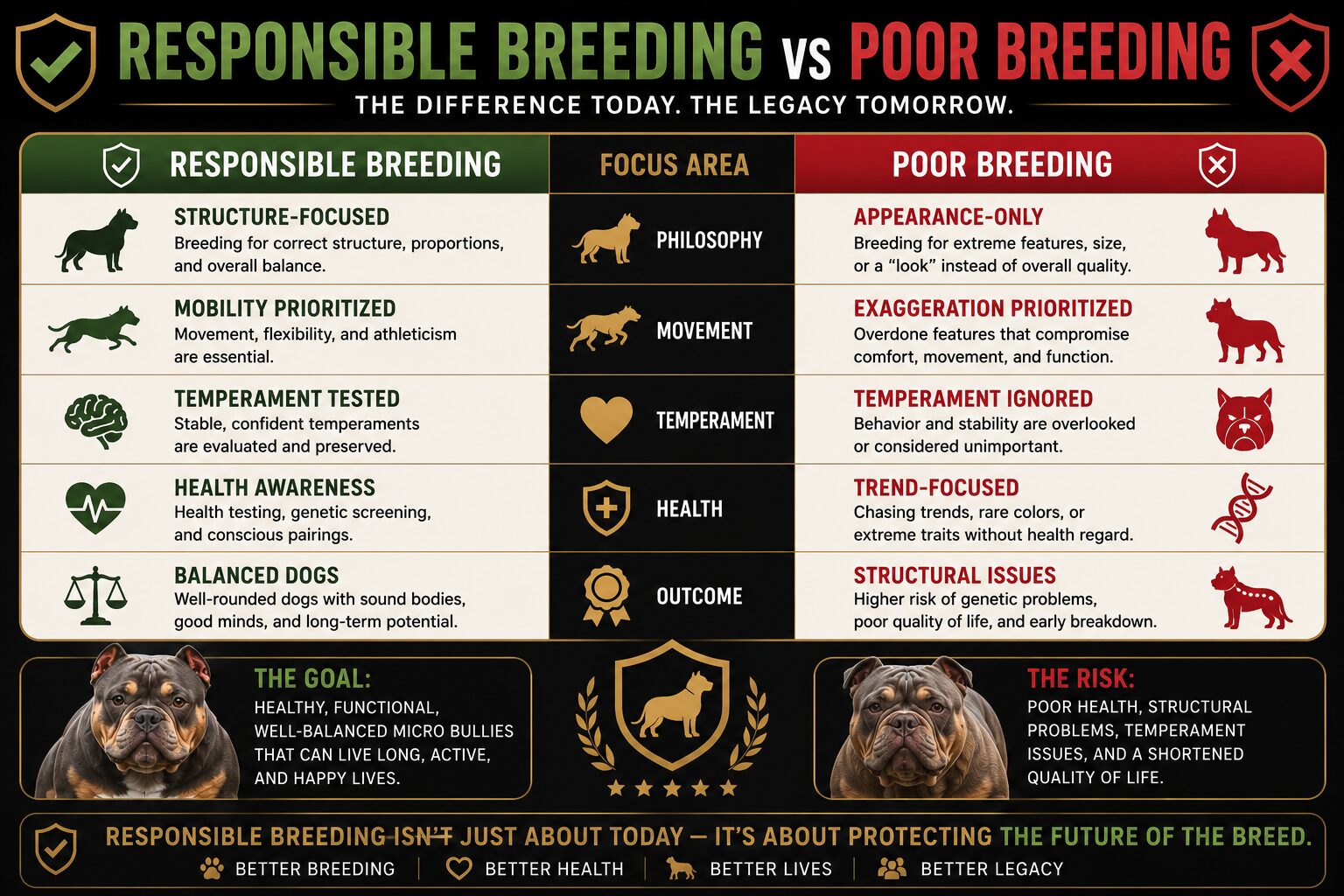
Responsible breeders aim for:
balance.
That means producing dogs with:
- healthy movement,
- stable temperament,
- balanced proportions,
- and sustainable structure.
Breeding goals should ideally include:
- consistency,
- wellness,
- mobility,
- and functionality.
Appearance should never outweigh:
- comfort,
- breathing,
- mobility,
- or quality of life.
Ethical Pairing Decisions
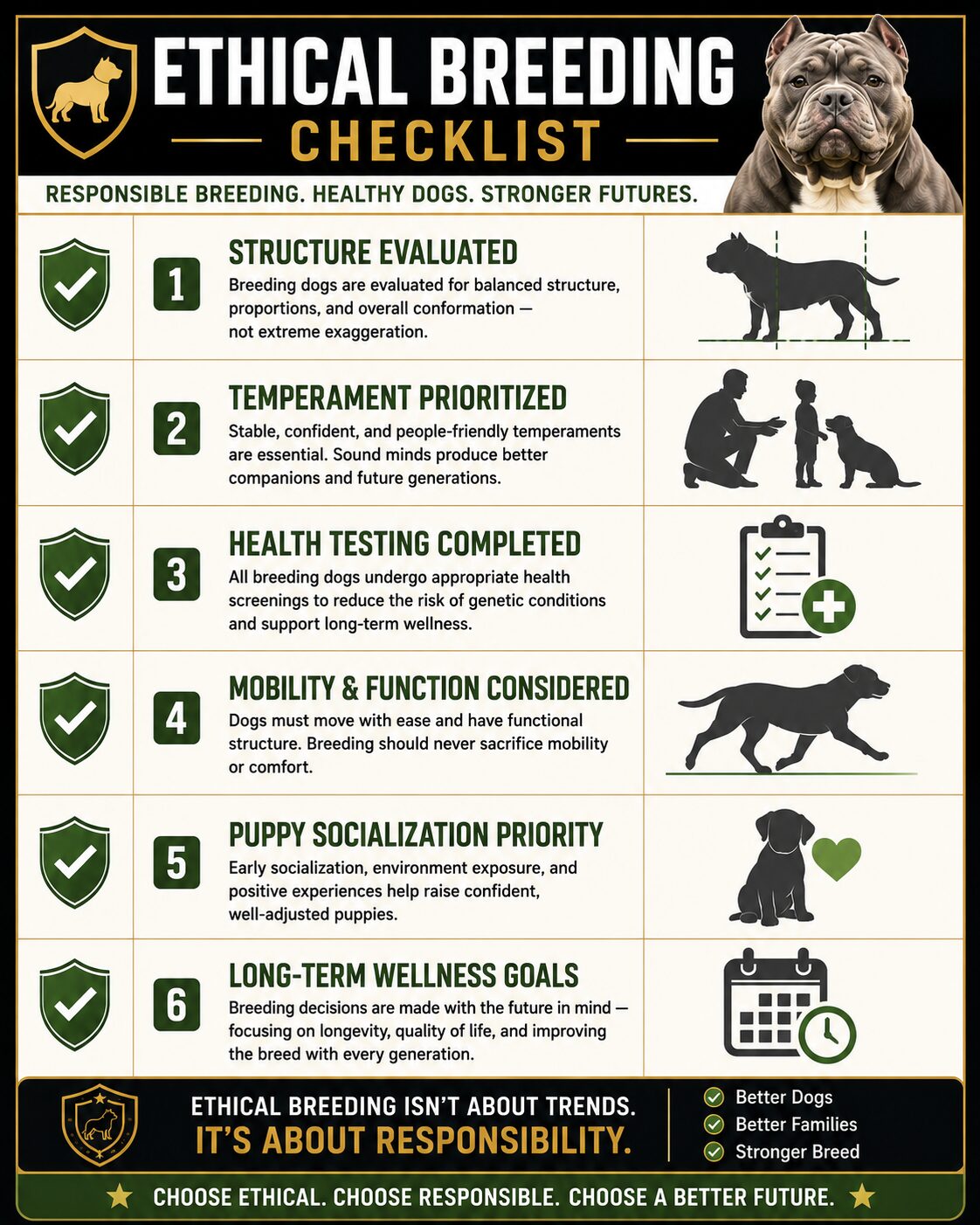
Ethical breeders carefully evaluate:
- pedigrees,
- structure,
- temperament,
- compatibility,
- and overall breeding goals before pairing dogs.
Breeding decisions should focus on:
- improving quality,
- preserving healthy traits,
- and avoiding unnecessary weaknesses.
Responsible breeding programs often require:
- patience,
- long-term planning,
- structure knowledge,
- and honest evaluation.
➡ Related Reading:
Understanding Micro Bully Bloodlines
Avoiding Exaggeration
One of the biggest challenges in modern bully breeding is:
avoiding unhealthy exaggeration.
Extreme features may sometimes compromise:
- movement,
- breathing,
- mobility,
- and overall comfort.
Responsible breeders should prioritize:
- function,
- balance,
- and healthy structure
over: - extremes,
- trends,
- or shock value.
Well-balanced dogs generally support:
- healthier movement,
- better longevity,
- and improved quality of life.
➡ Related Reading:
Micro Bully Lifespan
Questions Buyers Should Ask
Potential owners should carefully research breeders before purchasing a puppy.
Helpful questions may include:
- What structure goals are prioritized?
- How are breeding dogs evaluated?
- What temperament traits are emphasized?
- How are puppies socialized?
- What long-term health considerations are monitored?
Education helps buyers make:
- healthier,
- more informed,
- and more responsible ownership decisions.
➡ Related Reading:
Questions to Ask Before Buying a Micro Bully

➡ Looking for responsibly bred Micro Bullies?
Visit Capcity Bullys
Best Products for Raising Healthy Puppies
Helpful products for growing bully puppies may include:
- orthopedic beds,
- enrichment toys,
- slow feeder bowls,
- and supportive harnesses.
Recommended Product:
Orthopedic Dog Bed
Supportive beds may help improve comfort and recovery.
👉 View Orthopedic Dog Beds Review
Recommended Product:
Durable Enrichment Toys
Interactive toys may help support healthy stimulation and development.
➡ Explore More Products:
All Breeds Dog Store
Final Thoughts
Responsible Micro Bully breeding involves much more than appearance alone.
Ethical breeding should prioritize:
- structure,
- movement,
- temperament,
- health,
- and long-term wellness.
Balanced dogs with healthy mobility and stable temperaments generally support:
- better quality of life,
- healthier generations,
- and more sustainable breed development.
As interest in Micro Bullies continues growing, education surrounding responsible breeding practices becomes increasingly important for:
- breeders,
- owners,
- and the future of the breed type itself.