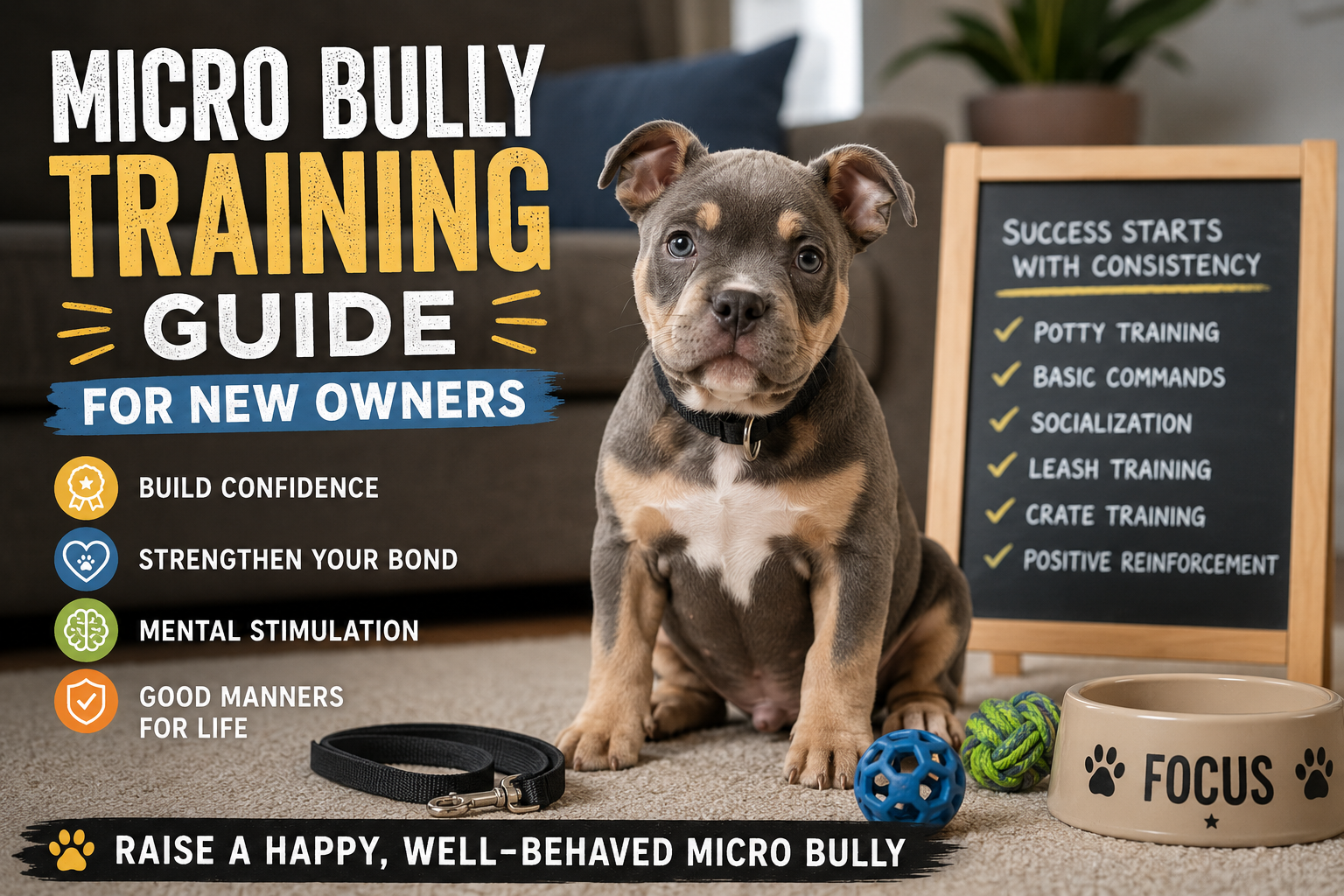
Everything You Need to Raise a Well-Behaved, Confident Micro Bully
Bringing home a Micro Bully puppy is an exciting experience, but it’s also the beginning of an important responsibility. Proper training doesn’t just teach your puppy good manners—it builds trust, strengthens your bond, and helps your dog become a confident, well-adjusted companion.
Micro Bullies are intelligent, loyal, and eager to please, making them highly trainable when you use consistency and positive reinforcement. Whether you’re a first-time owner or have experience with dogs, this guide will walk you through the essential training steps every new Micro Bully owner should know.
Why Training Matters
Training is about much more than teaching commands.
A properly trained Micro Bully is more likely to:
- Behave politely around people
- Walk calmly on a leash
- Respond when called
- Feel confident in new environments
- Be easier to groom and handle
- Enjoy trips to the veterinarian
- Become a trusted family companion
Training also provides valuable mental stimulation, which helps prevent boredom and unwanted behaviors.
When Should You Start Training?
Immediately.
Training begins the day your puppy arrives home.
Young puppies are constantly learning—even when you’re not actively teaching them.
Start with:
- House rules
- Name recognition
- Potty training
- Crate training
- Socialization
- Positive routines
The earlier you begin, the easier it is to build good habits.
Related: Micro Bully Puppy Checklist (Internal Link → Puppy Resources)
Use Positive Reinforcement
Positive reinforcement is one of the most effective ways to train a Micro Bully.
Reward behaviors you want to see with:
- Treats
- Praise
- Toys
- Playtime
- Affection
Instead of punishing mistakes, redirect your puppy toward the correct behavior and reward success.
Consistency and patience always produce better long-term results than harsh corrections.
Build a Daily Training Routine
Short, frequent sessions work best.
Aim for:
- 5–10 minute sessions
- 2–4 times per day
- End each session on a positive note
Keep training fun and engaging to maintain your puppy’s attention.
Essential Commands Every Micro Bully Should Learn
Sit
Often the first command puppies learn.
Helpful for:
- Greeting visitors
- Waiting patiently
- Building self-control
Stay
Teaches patience and safety.
Useful before:
- Opening doors
- Crossing streets
- Greeting guests
Come
A reliable recall command can keep your dog safe.
Practice in low-distraction environments before moving outdoors.
Always reward your dog generously for coming when called.
Down
Encourages calm behavior and helps your dog relax in busy environments.
Leave It
One of the most valuable safety commands.
Helps prevent your dog from picking up:
- Food
- Trash
- Dangerous objects
- Toxic plants
Place
Teaching your dog to settle on a bed or mat helps manage excitement during meals, visitors, or family gatherings.
Potty Training
Consistency is everything.
Take your puppy outside:
- First thing in the morning
- After meals
- After naps
- After play sessions
- Before bedtime
Reward successful potty trips immediately with praise and treats.
Avoid punishment for accidents, as it can create fear and confusion.
Related: Preparing Your Home for a Micro Bully Puppy (Internal Link → Puppy Resources)
Crate Training
A properly introduced crate provides your puppy with a safe, comfortable place to rest.
Benefits include:
- Easier house training
- Better travel experiences
- Reduced anxiety
- Safe management when unsupervised
Never use the crate as punishment.
Instead, make it a positive space by adding comfortable bedding and rewarding your puppy for entering voluntarily.
Leash Training
Apartment and neighborhood walks become much easier when leash training begins early.
Practice:
- Walking beside you
- Loose leash walking
- Stopping when pulling
- Rewarding calm behavior
Keep early walks short and positive.
Socialization Is Just as Important as Training
Between 8 and 16 weeks, puppies are especially receptive to new experiences.
Safely introduce your puppy to:
- Different people
- Friendly dogs
- Children
- Car rides
- Grooming
- Veterinary visits
- Household sounds
- Busy streets
- Parks
Positive experiences help build confidence throughout adulthood.
Prevent Common Behavior Problems
Many unwanted behaviors are easier to prevent than correct.
Teach your puppy not to:
- Jump on people
- Mouth hands
- Pull on the leash
- Beg at the table
- Bark excessively
- Guard toys or food
Reward calm, polite behavior consistently.
Mental Stimulation Matters
Training alone isn’t enough.
Provide daily enrichment with:
- Puzzle feeders
- Snuffle mats
- Frozen treats
- Chew toys
- Hide-and-seek games
- Food-dispensing toys
Mental exercise helps reduce boredom and destructive behavior.
Common Training Mistakes
Avoid these common errors:
❌ Inconsistent rules
❌ Long training sessions
❌ Punishing mistakes
❌ Skipping socialization
❌ Expecting immediate results
❌ Not rewarding good behavior
Patience and repetition are key to long-term success.
Sample Daily Training Schedule
Morning
- Potty break
- Breakfast
- Five-minute obedience session
- Short walk
Afternoon
- Potty break
- Puzzle toy
- Socialization outing
Evening
- Walk
- Play session
- Basic command practice
- Dinner
Before Bed
- Potty break
- Calm cuddle time
- Crate for bedtime
Routine helps puppies learn faster and builds confidence.
Should You Take a Puppy Training Class?
Many owners benefit from professional puppy classes.
Benefits include:
- Expert guidance
- Safe socialization
- Better owner confidence
- Controlled learning environment
- Fewer behavior problems later
Training classes are especially helpful for first-time owners.
Frequently Asked Questions
Are Micro Bullies easy to train?
Yes. Micro Bullies are intelligent and generally eager to please, making them highly trainable when positive reinforcement and consistency are used.
When should I start training my Micro Bully puppy?
Training should begin as soon as your puppy comes home. Early lessons in potty training, socialization, and basic commands lay the foundation for lifelong good behavior.
How long should training sessions be?
For young puppies, keep sessions to 5–10 minutes several times a day. Short, positive sessions are more effective than long training periods.
Should I use treats for training?
Yes. Small, healthy treats paired with praise are an excellent way to reward desired behaviors. As your puppy becomes more reliable, gradually reduce treats while continuing verbal praise and affection.
Do Micro Bullies need professional training?
Not always, but puppy classes or working with a qualified trainer can be very beneficial, especially for first-time owners or dogs that need extra guidance.
Our Final Thoughts
Training your Micro Bully is one of the best investments you can make in your dog’s future. Every lesson—from learning their name to mastering basic commands—builds trust, confidence, and a stronger relationship between you and your companion.
Remember that successful training isn’t about perfection. It’s about consistency, patience, and celebrating progress. A well-trained Micro Bully is happier, safer, easier to manage, and more enjoyable to live with for years to come.
Whether you’re teaching your puppy to sit, walk politely on a leash, or confidently explore new environments, every positive experience helps shape a well-mannered adult dog.
Explore Capcity Bullys

Looking for a Well-Bred Micro Bully Puppy?
At Capcity Bullys, we believe successful training starts long before a puppy goes home. Our puppies are raised with early socialization, daily human interaction, and a focus on confidence, temperament, and sound structure—giving new owners the best possible start.
Continue Reading
Continue building your Micro Bully knowledge with these TMBB guides: