

Micro Bullies are often recognized for their:
- muscular appearance,
- compact size,
- broad chests,
- and strong physical presence.
But despite their powerful look, many owners describe Micro Bullies as:
affectionate, loyal, playful, and companion-oriented dogs.
One of the biggest misconceptions surrounding bully breeds is temperament.
In reality, temperament is influenced far more by:
- breeding,
- socialization,
- training,
- environment,
- and ownership
than appearance alone.
This guide explains:
- typical Micro Bully temperament traits,
- behavior expectations,
- family compatibility,
- training considerations,
- and what potential owners should realistically expect.
What Is the Typical Micro Bully Temperament?
Properly bred and socialized Micro Bullies are often known for being:
- affectionate,
- loyal,
- social,
- people-oriented,
- and companion-focused.
Many owners describe them as:
- eager for attention,
- emotionally attached to family members,
- playful,
- and highly interactive.
Despite their muscular appearance, many Micro Bullies are often:
calm and affectionate inside the home.
Temperament can vary depending on:
- genetics,
- early socialization,
- training,
- and environment.
Are Micro Bullies Good Family Dogs?
Many properly raised Micro Bullies adapt very well to:
- family homes,
- indoor living,
- and companion lifestyles.
Owners often appreciate:
- their loyalty,
- close bonding behavior,
- and affectionate personalities.
Like all dogs, positive interactions with:
- children,
- guests,
- and other animals
should always be supervised and guided responsibly.
Early socialization plays a major role in helping dogs become:
- confident,
- stable,
- and well-adjusted companions.
➡ Related Reading:
Micro Bully Ownership
Loyalty & Human Bonding
One of the most commonly mentioned Micro Bully traits is:
strong loyalty.
Many Micro Bullies form:
- deep attachment to owners,
- close family bonds,
- and strong companion relationships.
They often prefer:
- spending time near their people,
- participating in family activities,
- and remaining involved in daily routines.
Because of this strong attachment, many Micro Bullies thrive best when they receive:
- attention,
- structure,
- interaction,
- and companionship.
Confidence & Personality Traits
Micro Bullies are often described as:
- confident,
- outgoing,
- curious,
- and playful.
Properly socialized dogs may display:
- stable behavior,
- relaxed confidence,
- and strong social adaptability.
Some dogs may also naturally display:
- alertness,
- excitement,
- or protective tendencies depending on:
- personality,
- breeding,
- and environment.
Owners should focus on developing:
- confidence,
- obedience,
- and balanced behavior through training and socialization.
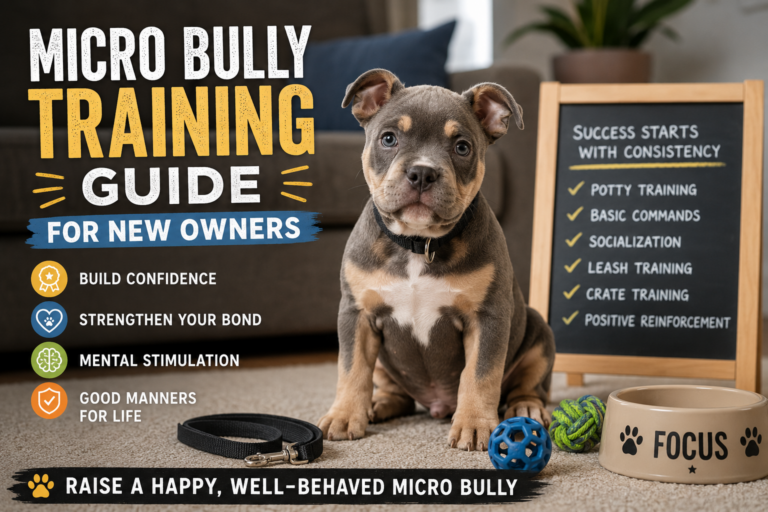
Training & Socialization
Training is extremely important for developing:
- confidence,
- obedience,
- social skills,
- and overall behavior.
Many Micro Bullies respond very well to:
- positive reinforcement,
- consistency,
- praise,
- and food-motivated training.
Helpful training goals may include:
- leash manners,
- crate training,
- obedience,
- confidence building,
- and controlled socialization.
Early exposure to:
- people,
- sounds,
- environments,
- and experiences
helps support more stable adult behavior.
➡ Related Reading:
Puppy Training Timeline
Exercise & Mental Stimulation
Micro Bullies generally benefit from:
- moderate exercise,
- structured routines,
- and mental stimulation.
Helpful activities may include:
- walks,
- obedience work,
- enrichment toys,
- and controlled play sessions.
Mental stimulation can be just as important as physical exercise because many bully breeds enjoy:
- interaction,
- problem solving,
- and engagement with owners.
➡ Related Reading:
How Much Exercise Does Your Dog Really Need?
How Breeding Influences Temperament
Temperament is heavily influenced by:
- genetics,
- breeding selection,
- socialization,
- and environment.
Responsible breeders should ideally prioritize:
- stable personalities,
- confidence,
- social behavior,
- and overall temperament quality.
Potential owners should carefully research:
- breeder practices,
- bloodlines,
- structure,
- and temperament goals before bringing home a puppy.
➡ Related Reading:
Responsible Micro Bully Breeding Practices

➡ Looking for well-bred Micro Bullies?
Visit Capcity Bullys
Apartment & Lifestyle Compatibility
Many Micro Bullies adapt well to:
- apartments,
- smaller homes,
- and indoor-focused lifestyles
when owners provide: - exercise,
- structure,
- and consistent routines.
Their compact size often appeals to owners wanting:
- bully breed appearance,
- with more manageable household size.
However, owners should still prioritize:
- daily activity,
- training,
- social interaction,
- and mental stimulation regardless of living environment.
➡ Related Reading:
Traveling With Your Dog: Complete Beginner Guide
Responsible Ownership Matters
Temperament development does not happen automatically.
Responsible ownership includes:
- training,
- socialization,
- structure,
- consistency,
- exercise,
- and healthy routines.
Owners who invest time into:
- obedience,
- positive exposure,
- and proper leadership
often help support: - more confident,
- stable,
- and balanced behavior.
Responsible breeding and responsible ownership work together to shape temperament.
Best Products for Training & Enrichment
Helpful products for Micro Bullies may include:
- enrichment toys,
- durable harnesses,
- slow feeder bowls,
- and orthopedic beds.
Recommended Product:
Durable Enrichment Dog Toys
Interactive toys may help support mental stimulation and engagement.
👉 View Durable Dog Toys on Amazon
Recommended Product:
Tactical Dog Harness
A supportive harness designed for compact muscular breeds.
👉 Tactical Dog Harnesses Review
➡ Explore More Products:
All Breeds Dog Store
Final Thoughts
Micro Bullies are often known for their:
- loyalty,
- affectionate personalities,
- confidence,
- and strong companion-oriented behavior.
While temperament can vary depending on:
- genetics,
- training,
- socialization,
- and environment,
many properly bred Micro Bullies become: - loving family companions,
- playful household dogs,
- and deeply bonded pets.
Responsible ownership, early socialization, and thoughtful breeding practices all play major roles in supporting stable temperament and healthy long-term behavior.
As the popularity of Micro Bullies continues growing, education surrounding temperament and responsible ownership remains increasingly important.
Pingback: Do Micro Bullies Bark a Lot? Understanding Micro Bully Barking and Behavior - The Micro Bully Breed