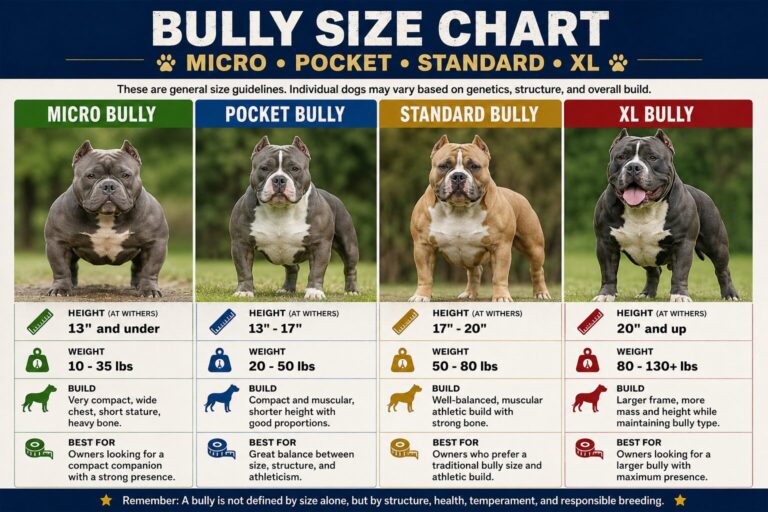
What’s the difference between a Micro Bully and a Pocket Bully?
At first glance, both dogs may appear similar because they share:
- compact builds,
- muscular frames,
- broad chests,
- and American Bully ancestry.
However, there are several important differences involving:
- size,
- structure,
- proportions,
- movement,
- and overall breeding goals.
Because classifications can vary depending on:
- breeder interpretation,
- registry standards,
- and bloodlines,
many new owners become confused about which bully type they are actually looking at.
This guide explains:
- Micro Bully vs Pocket Bully size differences,
- structure differences,
- temperament similarities,
- lifestyle considerations,
- and what owners should know before choosing either type.

What Is a Micro Bully?
A Micro Bully is a compact American Bully variety selectively bred for:
- shorter stature,
- muscular density,
- compact proportions,
- and strong visual presence.
Micro Bullies are generally:
- shorter,
- wider,
- lower to the ground,
- and more compact overall
than many Pocket Bullies.
They are often recognized for:
- heavy bone,
- broad chests,
- compact frames,
- and muscular builds.
➡ Related Reading:
What Is a Micro Bully?
What Is a Pocket Bully?
Pocket Bullies are another compact variation of the American Bully.
Compared to Standard American Bullies, Pocket Bullies are:
- shorter,
- muscular,
- and compact,
while still maintaining: - athletic movement,
- balanced proportions,
- and bully breed characteristics.
Pocket Bullies are often considered:
less extreme and more athletic
than many modern Micro Bullies.
Size Differences
One of the biggest differences between the two bully types is:
overall height and compactness.
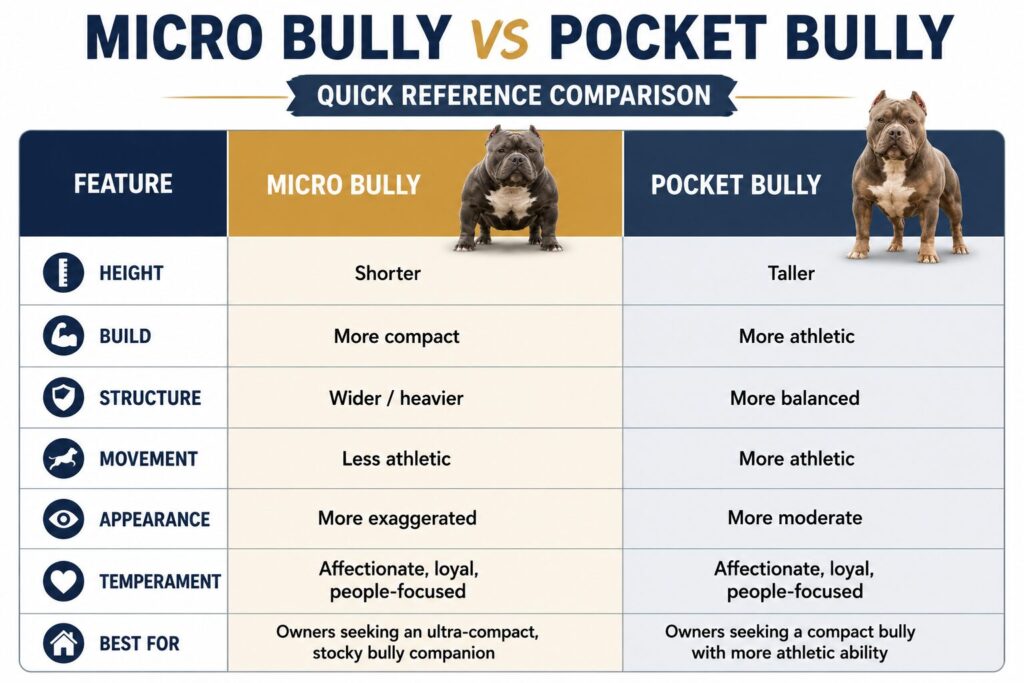
Micro Bullies
Generally:
- shorter,
- lower to the ground,
- and more compact overall.
Many Micro Bullies display:
- thicker builds,
- wider frames,
- and heavier muscle density.
Pocket Bullies
Pocket Bullies are often:
- slightly taller,
- more balanced,
- and more athletic in appearance.
They may retain:
- longer legs,
- more moderate width,
- and increased mobility compared to extremely compact Micro Bullies.
➡ Related Reading:
Micro Bully Size Chart
Structure & Build Differences
Micro Bullies are often selectively bred for:
- compact stature,
- heavy bone,
- broad chests,
- and muscular appearance.
Pocket Bullies generally maintain:
- more balanced proportions,
- cleaner athletic movement,
- and less exaggerated structure.
Micro Bullies may sometimes display:
- shorter legs,
- wider frames,
- and more exaggerated compactness.
Pocket Bullies often appear:
- taller,
- leaner,
- and more proportionally athletic.
➡ Related Reading:
Micro Bully Structure & Build
Movement & Athleticism
Pocket Bullies are often known for:
- more athletic movement,
- cleaner mobility,
- and moderate structure.
Micro Bullies may vary significantly depending on:
- breeding,
- bloodlines,
- and overall structure quality.
Responsible breeding should prioritize:
- movement,
- mobility,
- comfort,
- and balanced structure
regardless of bully type.
Excessive exaggeration may sometimes contribute to:
- reduced athleticism,
- mobility concerns,
- or structural imbalance.
Temperament Comparison
Both Micro Bullies and Pocket Bullies are often known for being:
- affectionate,
- loyal,
- companion-oriented,
- and people-focused.
Temperament is influenced far more by:
- breeding,
- socialization,
- training,
- and environment
than size alone.
Both types may thrive in:
- family homes,
- apartment living,
- and companion-focused lifestyles
when properly raised and socialized.
➡ Related Reading:
Micro Bully Temperament Explained
Lifestyle & Ownership Differences
Micro Bullies often appeal to owners looking for:
- compact size,
- exaggerated bully appearance,
- and strong physical presence.
Pocket Bullies may appeal more to owners wanting:
- a bully look,
- while maintaining:
- more athletic movement,
- cleaner proportions,
- and moderate compactness.
Both require:
- exercise,
- structure,
- socialization,
- training,
- and responsible ownership.
➡ Related Reading:
Micro Bully Ownership
Health & Structure Considerations
Health and mobility should always be prioritized over:
- trends,
- exaggeration,
- or social media appearance.
Responsible breeders should focus on:
- movement,
- breathing quality,
- balanced structure,
- mobility,
- and long-term wellness.
Potential owners should carefully research:
- bloodlines,
- breeder practices,
- structure,
- and overall breeding goals before bringing home a puppy.
➡ Related Reading:
Micro Bully Health & Wellness
➡ Related Reading:
Responsible Micro Bully Breeding Practices
Which Bully Type Is Right for You?
The right bully type depends on:
- lifestyle,
- activity level,
- structure preference,
- and ownership goals.
Owners looking for:
- extremely compact appearance,
- heavy muscle density,
- and shorter stature
may prefer Micro Bullies.
Owners wanting:
- moderate compactness,
- athletic movement,
- and balanced proportions
may prefer Pocket Bullies.
Regardless of type, responsible ownership and breeder selection remain extremely important.

➡ Looking for responsibly bred Micro Bullies?
Visit Capcity Bullys
Best Products for Compact Bully Breeds
Helpful products may include:
- orthopedic beds,
- durable harnesses,
- slow feeder bowls,
- and enrichment toys.
Recommended Product:
Orthopedic Dog Bed
Supportive beds may help improve comfort and joint support.
👉 View Orthopedic Dog Beds Review
Recommended Product:
Tactical Dog Harness
A durable harness designed for compact muscular breeds.
👉 See Tactical Dog Harnesses Review
➡ Explore More Products:
All Breeds Dog Store
Final Thoughts
Micro Bullies and Pocket Bullies both share:
- American Bully ancestry,
- muscular builds,
- and companion-oriented personalities.
However, they differ in:
- size,
- compactness,
- proportions,
- and overall structure goals.
Micro Bullies are generally:
- shorter,
- wider,
- and more compact,
while Pocket Bullies often maintain: - more athletic movement,
- moderate structure,
- and balanced proportions.
Understanding these differences helps owners make:
- better breeding evaluations,
- healthier ownership decisions,
- and more realistic expectations.
As interest in compact bully breeds continues growing, responsible breeding and education remain increasingly important.